
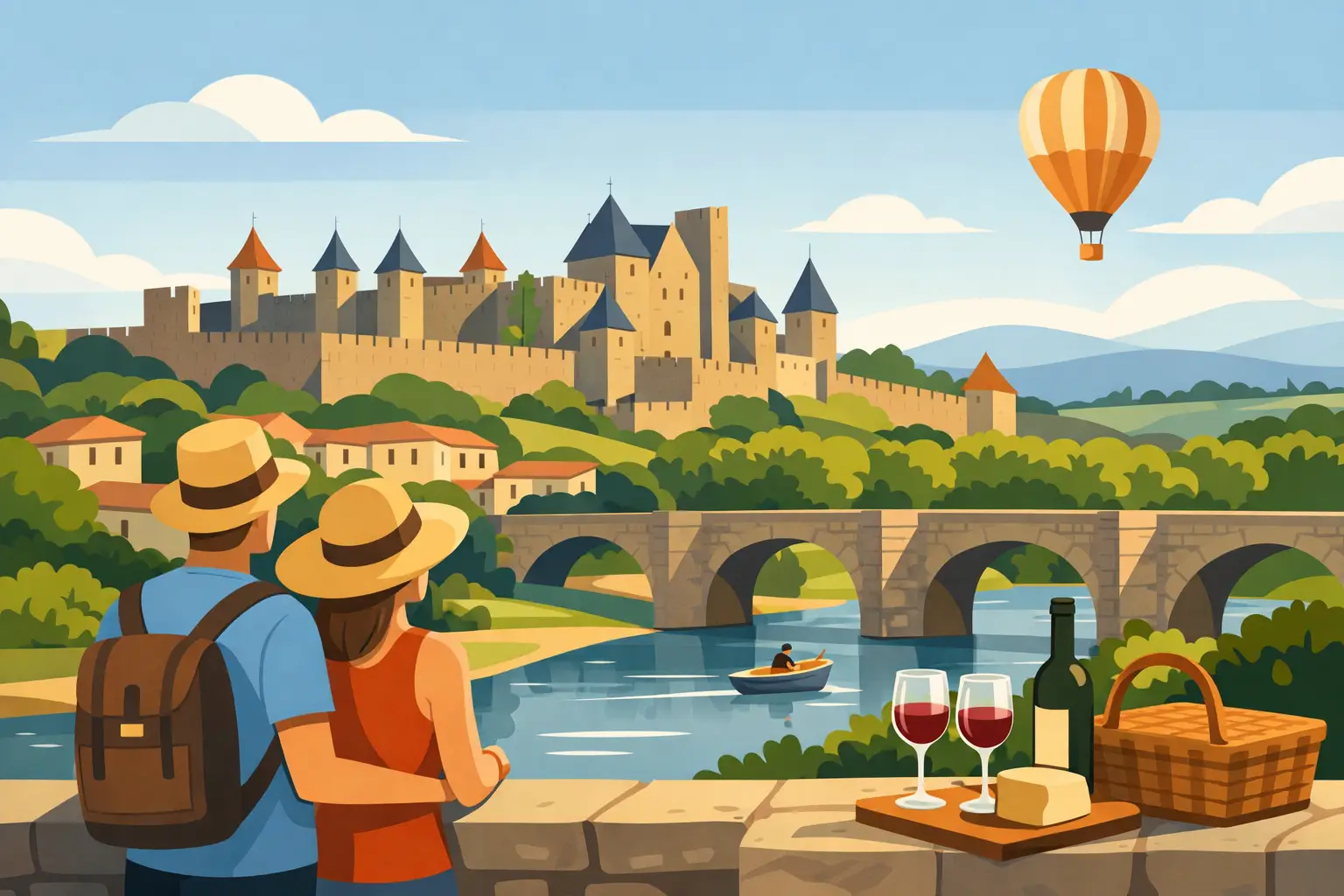
The walled city is most beautiful when it is not treated as a tick-box attraction. A Carcassonne itinerary for three days gives you time to see the great towers and cobbled lanes, then step beyond them into vineyards, canal-side villages and the wild country of the Cathars. It is a generous pace for a short break: enough structure to make each day worthwhile, with room for a long lunch, a quiet viewpoint and the pleasure of returning to a peaceful village in the evening.
A car makes this particular itinerary considerably easier. Carcassonne itself is walkable, but the surrounding wine country and historic sites are best enjoyed with the freedom to stop when a view or village catches your eye. From Leuc, the Medieval City is around ten minutes away, while much of the region remains comfortably within reach for a day out.
Day one: the Medieval City and old Carcassonne
Begin at the Cité de Carcassonne, ideally in the morning before the busiest part of the day. Its double ring of ramparts, 52 towers and rising slate roofs are impressive from any angle, but the pleasure lies in slowing down once inside. Walk through the Narbonnaise Gate, take in the wide views from the ramparts where access is available, and allow yourself to wander the smaller lanes away from the principal route.
The Château Comtal is worth prioritising. Its visit adds context to the fortress, from Roman foundations to its nineteenth-century restoration, and gives a clearer sense of why this hilltop stronghold became such an enduring symbol of the region. It can be busy in high season, so an earlier slot is usually more restful.
Pause in the basilica
The Basilica of Saint-Nazaire is a welcome change of atmosphere after the battlements. Its stained glass and Romanesque and Gothic details reward a few quiet minutes, particularly if the summer heat has begun to gather in the streets outside. This is the kind of place that benefits from standing still rather than hurrying on to the next sight.
For lunch, choose a table either within the Cité or down in the lower town. Restaurants inside the walls offer a particularly atmospheric setting, while the Bastide Saint-Louis often feels more local and can be better value. Cassoulet is the traditional local dish, though its rich, slow-cooked character may suit an evening meal better than a full afternoon of walking.
In the late afternoon, cross the Pont Vieux to the Bastide Saint-Louis. This older commercial quarter has a different rhythm from the fortress: broad streets, shuttered façades, small shops and Place Carnot at its centre. If it is market day, allow time to browse regional produce. Finish with a view back towards the illuminated walls from the riverbank. The Cité changes character as daylight softens, and this is often the most memorable moment of a first day.
Day two: Canal du Midi and Limoux vineyards
After a day of stone and history, make room for water, vines and open countryside. Start along a peaceful stretch of the Canal du Midi, the remarkable seventeenth-century waterway that links the Atlantic with the Mediterranean. A gentle towpath walk or cycle ride is enough to appreciate its plane trees, locks and slow-moving boats. The canal is not about covering miles; it is about settling into the region’s quieter tempo.
The character of the towpath depends on the season. Spring and autumn are especially pleasant for walking, while summer calls for an earlier start and plenty of water. Some stretches are more shaded than others, and works or weather can occasionally affect access, so it is sensible to ask locally for the best current route.
An afternoon on the Limoux wine route
From the canal, turn south towards Limoux and its surrounding vineyards. This is the home of Blanquette de Limoux, a sparkling wine with a proud local history, as well as Crémant de Limoux and still wines shaped by the cooler foothill climate. A tasting at a small producer can be one of the loveliest ways to understand the landscape – not simply by looking at it, but by hearing how the soil, elevation and seasons appear in the glass.
Book tastings in advance where possible, particularly at smaller estates. It is also wise to choose one or two places rather than trying to fit in too many. A relaxed visit, perhaps followed by lunch in Limoux beneath the arcades of the Place de la République, is far more rewarding than a hurried circuit of wineries.
If wine is not the focus of your holiday, Alet-les-Bains offers a graceful alternative. Its abbey ruins and riverside setting make an easy, gentle stop, and the journey there passes through the attractive upper Aude valley. You might combine a short walk with an unhurried lunch, then return to Leuc in time to rest before dinner.
This is a good evening to enjoy the calm that a rural base provides. After the bustle of the Cité, the sound of village life and the surrounding vineyards feel especially restorative. At Leuc Bed & Breakfast, guests can also ask for tailored suggestions for wineries, local restaurants and quieter scenic routes that suit the day’s mood.
Day three: Cathar country at a measured pace
For the final day, head into the Corbières for a more rugged expression of the region. This is Cathar country: limestone ridges, fortified villages, winding roads and castles that seem to grow from the rock. It is tempting to plan several castles in one day, but distances are longer and the sites themselves involve steep paths. Choosing one principal castle and one village creates a much more enjoyable day.
Lagrasse is an excellent first stop. Often considered one of France’s most beautiful villages, it has honey-coloured stone houses, a river, small independent shops and the handsome Abbaye de Lagrasse. Arrive in the morning, stroll the lanes and take time for coffee before visiting the abbey or settling into a leisurely lunch.
Choose your castle according to your appetite for walking
From Lagrasse, Château de Termes makes a compelling choice for travellers interested in the Cathar story. The remains are evocative rather than polished, and the setting is dramatic. The route and terrain require sensible footwear, and summer heat can make the ascent feel more demanding than expected. The reward is a strong sense of the landscape that shaped this turbulent history.
Those keen on a bigger, more theatrical day could instead travel further south towards Peyrepertuse or Quéribus. Both are spectacular, with vast views and a genuinely wild setting, but they make for a longer drive and involve more walking. They are best chosen when you are happy to devote the day to the castle itself rather than fitting in several stops. In winter or during uncertain weather, check opening arrangements before setting off.
On the return journey, leave time for an unscheduled pause. A roadside viewpoint over the Corbières, a quiet village square or a small bakery can become the detail you remember most clearly. This part of the Aude rewards curiosity more than speed.
A few details that make three days feel easy
Comfortable shoes are essential for Carcassonne’s uneven cobbles and any castle walk. In warmer months, carry water, a hat and sun protection; the ramparts and hilltop sites have little shade. Restaurant reservations are helpful on Friday and Saturday evenings, as well as throughout the main summer season.
Consider timing your days around the light. The Cité is especially lovely early in the morning and near sunset, while vineyard visits and country drives have their own charm in the softer afternoon hours. If rain arrives, the château, basilica, museums and a long regional lunch offer satisfying alternatives to outdoor plans.
Most of all, let the itinerary remain a guide rather than a timetable. Three days around Carcassonne are not an invitation to race between attractions. They are an opportunity to combine grand history with small pleasures: a glass of local sparkling wine, the shade of canal trees, a view across vines, and a restful evening in the quiet countryside.
Leave a Reply