
The best market mornings begin before the heat settles over the stone streets. Knowing the Carcassonne market days and times lets you arrive while the stalls are full, choose a few treats for a picnic, and still have the afternoon for the Medieval City, a vineyard visit or a gentle walk beside the Canal du Midi.
For visitors staying in the quieter villages around Carcassonne, the market is an easy and rewarding reason to spend a morning in the lower town, known as the Bastide Saint-Louis. It is less about rushing through a shopping list and more about noticing the season: peaches and cherries in summer, fragrant herbs, ripe goat’s cheese, olives, duck specialities and the reassuring bustle of local life.
Carcassonne market days and times at a glance
Carcassonne’s principal open-air market is held in Place Carnot, at the heart of the Bastide Saint-Louis, on Tuesday, Thursday and Saturday mornings. Stalls generally trade from around 7.00 am until 1.00 pm.
Saturday is usually the liveliest choice, with the broadest mix of produce, regional food, clothing, household goods and occasional craft stalls. It is ideal if you enjoy a little atmosphere and do not mind sharing the square with local shoppers and fellow visitors. Tuesday and Thursday tend to feel calmer, making them particularly pleasant for an unhurried browse followed by coffee on a shaded terrace.
Market arrangements can change for public holidays, special events and the height of summer, so it is sensible to treat these as the usual hours rather than a fixed promise. If a particular market visit is central to your plans, check locally once you arrive. Your hosts can often confirm what is happening that week, including smaller village markets that are easy to miss.
When to arrive
For the fullest choice of fruit, vegetables, cheese and bread, arrive between 8.00 am and 10.00 am. The early light is lovely in the Bastide, and you will have time to wander without feeling that the morning has disappeared.
Between 10.30 am and midday, Place Carnot becomes more animated. This can be a delightful time to linger, although popular items may have sold out and parking takes more patience. Towards closing, some traders may offer a modest reduction on highly perishable produce, but it is not the moment to expect every stall to be fully stocked.
What you will find in Place Carnot
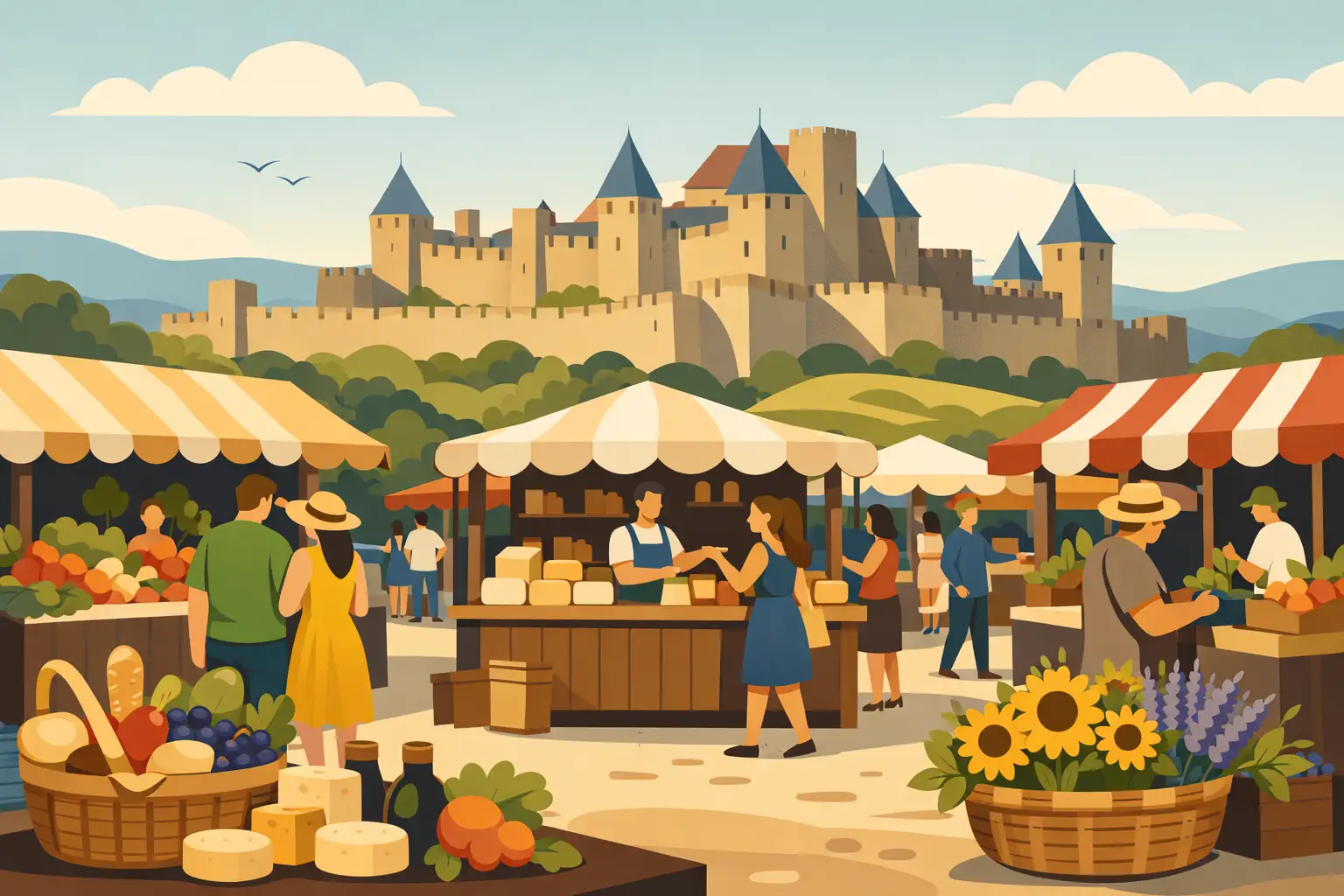
This is a proper town market rather than a souvenir market. Bring a basket or reusable bag if you can, and leave room for the things that make a simple holiday lunch memorable.
Depending on the season, expect baskets of local fruit and vegetables, eggs, freshly baked bread, honey, herbs, charcuterie and cheeses from the wider Aude and Languedoc region. You may also find olives, tapenades, dried fruits, spices, flowers, clothing, linens and practical everyday goods. The selection changes with the weather and with the growers, which is part of its charm.
A few regional flavours are especially worth seeking out. Ask for a local goat’s cheese, often sold fresh, soft and delicately tangy. Look for duck products, saucisson, pâté and jars of cassoulet for an easy taste of Carcassonne’s most famous dish. In warmer months, sun-ripened tomatoes, melons, apricots and peaches can turn a modest picnic into a highlight of the day.
If you are planning a vineyard visit later, buy lightly. A baguette, cheese, fruit and a small jar of tapenade travel well, but a car boot full of delicate produce does not sit happily in summer temperatures. Equally, wine is often better chosen at the estate itself, where you can taste, ask questions and take home a bottle that carries the memory of the place.
A relaxed way to plan your market morning
Begin with a slow circuit of the square before buying anything. It is tempting to choose the first beautiful display, but a lap gives you a feel for prices, quality and what is genuinely in season. You may notice that one stall specialises in cheese while another has exceptional tomatoes or herbs.
Then buy enough for one or two meals rather than trying to recreate a full kitchen shop. Holiday cooking should feel pleasurable, not like a logistical task. A market breakfast can be as simple as warm bread, fruit and good coffee; lunch might be a picnic beside the Canal du Midi or in one of Carcassonne’s green spaces.
French greetings go a long way. A cheerful “Bonjour” when approaching a stall and “Merci, au revoir” as you leave are appreciated. Most traders are patient with visitors, even if your French is limited. Pointing, smiling and asking “Combien?” will usually take you where you need to go. Carrying some cash remains useful for smaller purchases, although card payment is increasingly common.
Parking and getting around on market days
Place Carnot sits within the Bastide Saint-Louis, not inside the Medieval City. From Leuc, it is an easy drive into Carcassonne, generally around 15 minutes depending on traffic and where you park. The main consideration on market mornings is not distance but allowing a little extra time to find a space.
Choose one of the public car parks around the Bastide rather than attempting to drive into the narrowest central streets. From there, Place Carnot is reached on foot in a few minutes. This approach makes the morning feel calmer and allows you to enjoy the streets, small shops and cafés without worrying about the car.
If you are visiting in July or August, arrive earlier than you think necessary. Carcassonne is especially popular then, and Saturday brings both market shoppers and visitors heading towards the Cité. In spring and autumn, the pace is gentler, with mild weather that suits combining the market with a longer walk through town.
Pair the market with the right Carcassonne visit
A market morning fits beautifully with the Bastide itself. After shopping, pause in Place Carnot for a drink beneath the plane trees, then stroll towards the Canal du Midi for a waterside walk. The lower town has a lived-in, less theatrical character than the Medieval City, and it rewards a slower pace.
For a first visit to Carcassonne, you could shop in the morning, have lunch in the Bastide, and head to the Medieval City later in the afternoon. The walls are particularly handsome as the sun softens, while the morning market gives you a sense of the region beyond its famous fortress.
If you prefer to avoid the busiest periods, choose Tuesday or Thursday and save Saturday for a wine route outing towards Limoux or the surrounding countryside. There is no single perfect plan. It depends on whether you want a sociable town atmosphere, quiet sightseeing or time to explore further afield.
Seasonal notes for food lovers
The market changes character through the year. Spring brings asparagus, strawberries and fresh cheeses, often at their most appealing when eaten simply. Summer is generous and colourful, with stone fruit, tomatoes, peppers and herbs that practically ask to be packed into a picnic basket.
Autumn is wonderful for grapes, figs, mushrooms and heartier ingredients as the evenings become cooler. Winter markets are smaller in feel but still satisfying, particularly for charcuterie, cheese, seasonal citrus and ingredients suited to a comforting cassoulet. Christmas may also bring seasonal stalls and a more festive atmosphere in the town.
For walkers and cyclists, market provisions make a useful alternative to a restaurant lunch. Choose fruit that will travel well, a firm cheese and bread, then keep everything cool until you set off. In hot weather, avoid leaving purchases in the car while you visit the Cité or spend hours outdoors.
Make the market part of your stay, not a chore
Carcassonne’s market is at its best when you leave space for small discoveries: a cheese you have never tried, an elderly shopper choosing the week’s vegetables, the scent of roast chicken drifting across the square. There is no need to arrive with a rigid list or to buy a great deal.
A peaceful stay in nearby Leuc gives you the freedom to enjoy this rhythm. You can take a market morning at your own pace, return to the calm of the village with a few good things to eat, and let the rest of the day unfold among vineyards, historic lanes and the wide Languedoc light. That is often where the most memorable holiday moments begin.
Leave a Reply