
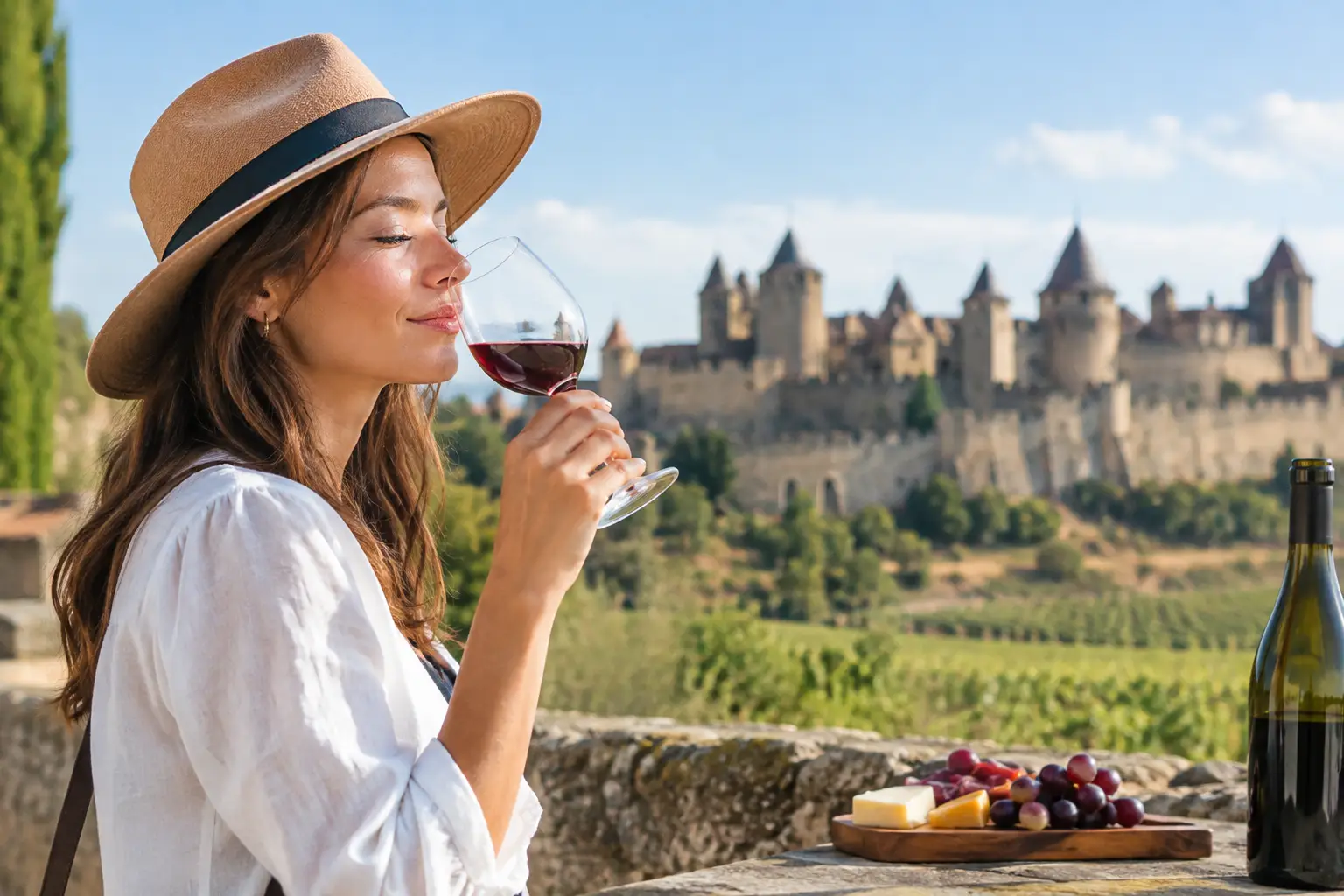
A self guided wine tasting in Carcassonne is less about racing from one cellar door to the next and more about giving the day some breathing room. This is a part of France where vines sit beside medieval villages, quiet lanes and wide views towards the hills. Choose one wine area, allow time for a proper lunch and leave space for the unplanned stop that catches your eye.
For couples staying near the city, it is a lovely way to see the countryside beyond the ramparts. You need not know your Grenache from your Malbec before you arrive. A little curiosity, a sensible plan and a designated driver are enough.
Why Carcassonne suits a self guided wine tasting
Carcassonne lies close to several distinct wine landscapes. To the west and south-west, the vineyards of Malepère lead towards Limoux. North of the city, Cabardès brings a change of scenery as the vineyards meet the lower slopes of the Montagne Noire. Further east and south, the Corbières offer bigger horizons, rocky ground and handsome old villages.
That variety is the pleasure of planning your own day. You can choose a short route with two appointments and an afternoon walk, or make a longer outing with a village lunch and a visit to a local market. There is no need to turn it into a test of endurance.
The wines themselves are varied too. You may come across fresh whites, rosés and reds made from familiar Mediterranean grapes, alongside blends that reflect the cooler Atlantic influence felt in some areas. Near Limoux, sparkling wines are an obvious point of interest. The best approach is simply to ask what the grower feels expresses their place and style.
Pick one area rather than trying to cover them all
The most enjoyable self guided wine tasting Carcassonne day usually has a clear direction. Trying to visit Malepère, Cabardès and the Corbières in a single day means spending more time in the car than among the vines.
Malepère and the Limoux direction
This is a good choice if you would like gentler landscapes and the possibility of combining wine with the characterful town of Limoux. Malepère is known particularly for red and rosé wines, while the wider Limoux area gives you the chance to explore still wines and sparkling styles. It suits a relaxed day when you would like to stop for lunch without watching the clock too closely.
Cabardès and the Black Mountain foothills
Head north of Carcassonne for vineyards with changing views towards the Montagne Noire. Cabardès can be an appealing option for people interested in how climate shapes wine, as Mediterranean warmth and cooler influences meet here. The roads can be quiet and scenic, but they are rural roads, so build in a little extra time rather than relying on a tightly timed itinerary.
Corbières for a fuller day out
The Corbières are better treated as a day in their own right. The terrain becomes more rugged, the villages often feel more remote and there are plenty of reasons to stop beyond wine. If you are drawn to stone houses, old abbeys, photographs of garrigue-covered hills and long lunches, this may be your direction. It is not the best choice if you only have a couple of hours to spare.
Plan appointments before setting off
Many small producers welcome visitors, but opening arrangements can vary with the season, harvest work and family commitments. A cellar that appears open on a map may be working by appointment, especially outside the busiest months. Contacting a domaine in advance is not formal or fussy – it is the considerate way to make sure someone is ready to receive you.
When you enquire, say how many of you are coming, whether you speak French, English or another language, and whether you would like a simple tasting or a tour as well. Ask how long to allow, whether there is a charge, and if booking is essential. Tasting fees, opening hours and tour arrangements change, so it is worth confirming them directly rather than relying on an old guidebook.
Two tastings in a day are generally plenty. If you are particularly interested in wine, three can work if the visits are short and you have a driver who is not tasting. More than that can blur the differences between wines and leave little room for the countryside that brought you there.
A practical route for an unhurried day
Start later than you might expect. A morning visit can be pleasant, but an 11 o’clock appointment often gives you time for breakfast, maps and a calm start. Follow it with lunch in a town or village nearby, then arrange one afternoon tasting. That rhythm gives each stop its place.
Bring water and something to carry home a bottle or two safely. Cellar floors can be cool even on a bright day, and a light layer is useful if your visit includes the winery itself. Comfortable shoes are a better choice than footwear intended only for a city stroll, particularly if you have booked a vineyard walk.
Use a paper map or download directions before leaving, as mobile reception can be patchy in more rural places. French village signs are generally clear, but satnavs occasionally favour narrow lanes that are technically possible rather than enjoyable. If a route looks implausibly tiny, trust your judgement and take the more straightforward road.
Most importantly, decide on driving before the first glass is poured. Spitting is entirely normal at a professional tasting and no one will think it rude. You can also share small samples, choose one person to taste lightly, use a taxi where practical, or plan a single tasting close enough to return without a car. Wine is more enjoyable when everyone gets home comfortably.
How to get more from a tasting
You do not need special vocabulary. Begin by saying what you usually enjoy, whether that is a crisp white, a lighter red or something fuller with dinner. A good host can steer the tasting from there. If you dislike a wine, it is fine to say it is not quite your style. Tasting is about preference, not passing an exam.
Ask a few simple questions: which grapes are in the bottle; what is the soil like; how long can the wine be kept; and what would the producer serve with it? These questions often lead to the most interesting conversations. They also help when deciding what to buy, particularly if you would like a bottle for a meal during your stay.
Do not feel obliged to buy. A warm welcome at a tasting does not create a duty to leave with a case of wine. Equally, buying directly from a producer can be a satisfying way to remember the day if you have found something you genuinely like. Check luggage limits if you are flying, and keep bottles out of a hot car wherever possible.
Make room for food, villages and a slower afternoon
The pleasure of this region is that a wine day can be about more than wine. Add a bakery stop for bread and local cheese, a waterside walk, or time to wander a village square before your afternoon appointment. A long restaurant lunch is tempting, but it can make an afternoon tasting less useful, so a lighter meal is often the better compromise.
If you are staying with us at Le Clos de Leuc, we are always happy to help you think through the shape of a day, whether you want to focus on a nearby appellation or mix vineyards with Carcassonne and the surrounding countryside. We can help with practical local perspective, while the final choice remains yours.
Spring and autumn are especially pleasant for combining tastings with walking and photography. Summer brings long, bright days, although the middle of the afternoon can be hot. Harvest is fascinating but busy, and visits may be more limited as producers concentrate on the work in hand. Winter can be wonderfully quiet, provided you plan ahead and accept shorter days.
Socks, our Guest Welcome Officer, has firm views on a peaceful return after a day out, though he is less useful on the subject of tannins.
A good wine day need not be ambitious to be memorable. Choose a direction, arrange a couple of genuine encounters and leave enough time to sit over a glass of something you enjoyed. If you are planning a few days near Carcassonne, do check availability or contact us, and we will be glad to help you find a pace that feels right.
Leave a Reply